

Blog
Decision-Making in Business: Tools for Confident Leadership
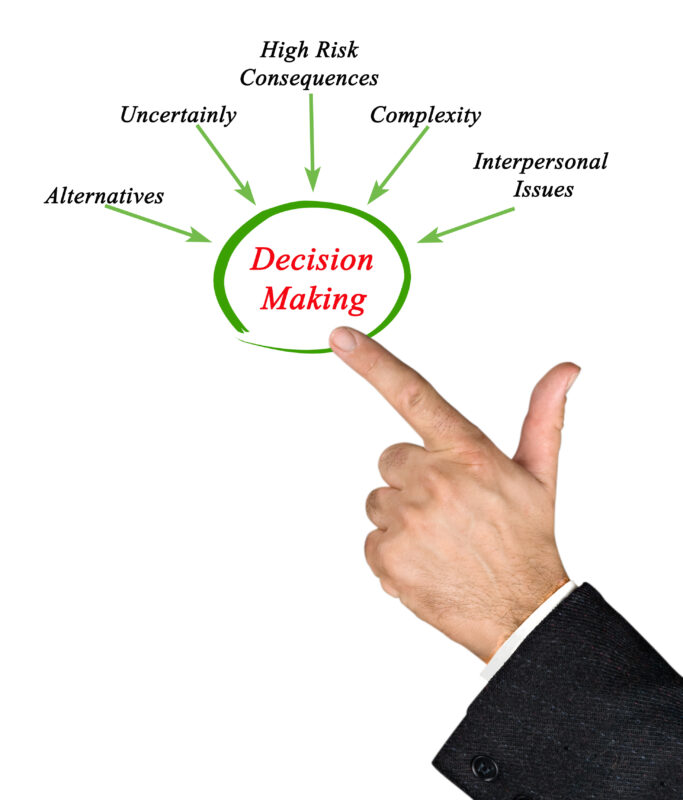
In today’s complex and rapidly evolving business environment, decision-making stands at the core of effective leadership. Every strategic initiative, investment choice, hiring decision, and operational adjustment reflects a leader’s judgement. While uncertainty is unavoidable, confident leadership is demonstrated through structured, informed, and timely decisions.
At the London School of Business Administration, we emphasise that decision-making is both a disciplined process and a leadership capability. It requires analytical tools, strategic awareness, ethical consideration, and emotional intelligence. This article explores key frameworks and approaches that enable managers to make sound decisions with confidence.
The Strategic Importance of Decision-Making
Business leaders operate in environments characterised by competition, market volatility, technological disruption, and stakeholder expectations. Poor decisions can result in financial loss, reputational damage, or operational inefficiency. Conversely, well-informed decisions drive innovation, resilience, and growth.
Effective decision-making contributes to:
- Strategic alignment
- Risk mitigation
- Resource optimisation
- Organisational credibility
- Sustainable competitive advantage
Confident leadership does not imply impulsiveness; it reflects thoughtful analysis combined with decisive action.
The Structured Decision-Making Process
A systematic approach enhances clarity and reduces bias. A structured framework typically includes:
- Clearly defining the problem or opportunity
- Gathering relevant information
- Generating alternative solutions
- Evaluating risks and potential outcomes
- Selecting the most appropriate option
- Implementing the decision
- Reviewing results and learning from outcomes
Skipping stages often leads to incomplete analysis or unintended consequences. Structure provides consistency and accountability.
Analytical Tools for Effective Decisions
1. SWOT Analysis
SWOT (Strengths, Weaknesses, Opportunities, Threats) offers a balanced evaluation of internal capabilities and external conditions. It is particularly useful when assessing strategic initiatives or market entry decisions.
2. Cost–Benefit Analysis
This tool compares expected benefits with associated costs. By quantifying financial and non-financial implications, leaders can assess whether an initiative generates sufficient value.
3. Decision Trees
Decision trees map out alternative scenarios and associated probabilities. They are valuable when evaluating complex choices involving multiple potential outcomes.
4. Risk Assessment Matrix
A risk matrix assesses the likelihood and impact of potential events. It supports prioritisation of mitigation strategies and strengthens organisational resilience.
5. Scenario Planning
Scenario planning explores multiple plausible future environments. Rather than predicting a single outcome, it prepares organisations for a range of possibilities, enhancing strategic flexibility.
The Role of Data in Modern Decision-Making
The digital era has introduced unprecedented access to data. Analytics platforms provide insights into customer behaviour, financial performance, and operational trends.
Data-driven decision-making enables:
- Evidence-based strategy
- Real-time performance monitoring
- Forecasting and predictive modelling
- Continuous performance improvement
However, data must be interpreted critically. Effective leaders combine quantitative insights with contextual judgement.
Overcoming Cognitive Bias
Even experienced managers are susceptible to cognitive biases that distort judgement.
Common biases include:
- Confirmation bias
- Overconfidence bias
- Anchoring bias
- Groupthink
Leaders mitigate these risks by encouraging diverse viewpoints, seeking external feedback, and applying structured evaluation frameworks.
Emotional Intelligence and Decision-Making
Decision-making extends beyond analytical reasoning. Leaders must consider the emotional and relational impact of their choices.
Emotionally intelligent leaders:
- Communicate decisions clearly and respectfully
- Anticipate stakeholder reactions
- Manage conflict constructively
- Maintain composure under pressure
Emotional awareness strengthens acceptance and reinforces organisational trust.
Balancing Speed and Accuracy
In competitive markets, delayed decisions can be as damaging as incorrect ones. Leaders must balance thorough analysis with timely execution.
Strategies for improving decisiveness include:
- Establishing clear decision authority
- Setting deadlines for analysis
- Delegating appropriately
- Applying predefined evaluation criteria
Confidence emerges from preparation and clarity rather than haste.
Ethical Considerations in Decision-Making
Leadership decisions carry ethical implications. Responsible decision-making requires transparency, fairness, and alignment with organisational values.
Ethical decision-making involves:
- Assessing stakeholder impact
- Considering long-term consequences
- Ensuring compliance with regulations
- Maintaining integrity and accountability
Trust is strengthened when decisions reflect both strategic logic and ethical responsibility.
Developing Decision-Making Competence
Decision-making skills can be developed through structured learning, reflective practice, and experiential exposure. Managers who refine this capability enhance their effectiveness across strategic, financial, and operational domains.
At the London School of Business Administration, our Leadership and Management programmes integrate analytical frameworks, case-based learning, and strategic evaluation tools to strengthen decision-making competence. Participants learn how to combine evidence-based analysis with leadership judgement in complex business scenarios.
Conclusion
Decision-making in business is not a singular event but an ongoing leadership responsibility. Confident leaders apply structured tools, interpret data thoughtfully, manage risk responsibly, and communicate decisions effectively.
In an environment marked by uncertainty and rapid change, the ability to make sound, timely, and ethical decisions defines successful leadership. By mastering analytical frameworks and cultivating emotional intelligence, managers transform complexity into clarity and uncertainty into opportunity.
Effective decision-making is not merely a managerial task—it is the foundation of sustainable organisational success.