


In the UK labour market, marketing analytics has moved into the mainstream. A live jobs benchmark recorded 143 permanent UK vacancies citing “Marketing Analytics” in the six months to 29 September 2026, compared with 27 vacancies a year earlier, and the median annual salary was £72,750. That shift matters because it shows analytics is no longer a back-office reporting task, it is a capability employers expect in people who can connect campaign activity to business outcomes (source).
For a manager, that changes the question. The core issue is not whether a team can pull a dashboard, but whether it can use evidence to decide what to do next. That is why analytics now sits alongside strategy, leadership, and execution as a practical business skill, not a specialist extra. For readers who want to build that judgement in a structured way, the argument made in this guide on managers and analytics skills is a useful companion to the discussion here.
Table of Contents
- Introduction – Analytics as a Leadership Capability
- Understanding Marketing Analytics – Core Concepts and Metrics
- Attribution Modelling and Customer Segmentation
- The UK Measurement Environment – Tools, Standards, and Compliance
- Real-World Applications and Decision Scenarios
- Building Analytics Capability in Your Organisation
- Practical Steps to Develop Your Analytics Skills
Introduction – Analytics as a Leadership Capability
A small marketing team can survive on instinct for a while. A growing business cannot. Once channels multiply, budgets tighten, and customer journeys fragment, leaders need a way to tell whether activity is actually moving the business forward.
That is why the rise in UK vacancies is such a useful signal. It suggests employers want people who can read data, shape campaigns, and judge commercial impact, not just produce creative work. When analytics becomes part of hiring demand, it is usually because organisations have realised that measurement is now tied to decision-making, not merely after-the-fact reporting.
From campaign activity to business judgement
A useful way to think about analytics in marketing is as the bridge between action and outcome. The campaign goes live, data arrives, and the leader must decide whether to keep going, adjust, or stop. Without analytics, that decision rests on habit, seniority, or opinion.
Practical rule: if a marketing decision cannot be linked to a measurable effect, it is probably being managed too loosely.
That is why the topic belongs in boardrooms as much as in analyst teams. Entrepreneurs need it to judge where to spend scarce budget, managers need it to compare channels, and senior leaders need it to understand whether growth is coming from repeatable process or one-off luck. Analytics is leadership because it improves the quality of judgment.
Understanding Marketing Analytics – Core Concepts and Metrics
Marketing analytics is the systematic measurement, collection, analysis, and reporting of marketing data so that people can make better decisions. The key point is that it is not the same as producing a report. A report describes what happened. Analytics asks why it happened, what it means, and what should happen next.
Metrics that tell you different kinds of truth
Some metrics tell you about attention. Others tell you about value. An impression says a message was seen. A click tells you someone acted on it. A conversion tells you the action mattered commercially. The mistake many teams make is stopping at the easiest number to measure.
That is where the distinction between vanity metrics and value metrics matters. A dashboard can show speed without showing direction. You may know traffic is up, but that does not tell you whether the right people arrived, whether they stayed, or whether they bought anything.
A more disciplined view uses metrics in layers:
- Engagement measures show whether audiences noticed and interacted with the message.
- Efficiency measures show how much it cost to acquire interest or action.
- Business outcome measures show whether marketing contributed to revenue, retention, or growth.
Analytical habit: start with the question, then choose the metric. Not the other way around.
Measurement infrastructure matters
Good analytics also depends on the systems behind the numbers. Data collection rules, tagging, audience definitions, and reporting logic all shape what the team can trust. For professionals who need a structured grounding in these ideas, Data Visualisation fits naturally into the wider skillset because the way numbers are presented affects the way decisions are made.
When people speak about “the dashboard”, they often mean the surface. The deeper work sits underneath it, in the way data is captured, joined, and interpreted. That is why analytics becomes more reliable when teams treat measurement as an operating system rather than an occasional report.
Attribution Modelling and Customer Segmentation
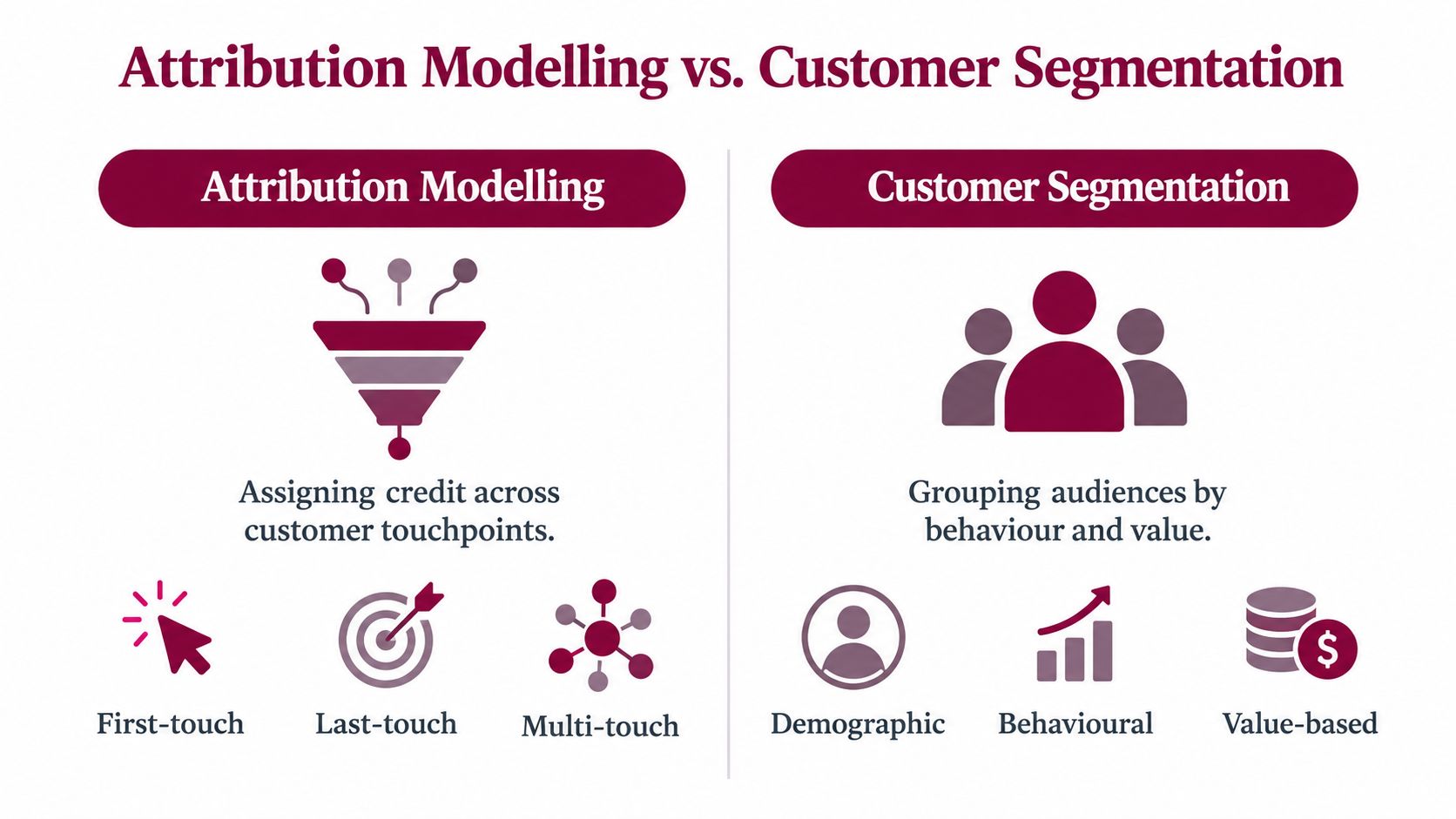
A single customer journey can pass through several touchpoints before a conversion appears. That is why attribution modelling matters. It asks which interactions deserve credit, then uses that answer to inform budget, channel, and creative decisions.
Why attribution gets complicated
A first-touch model credits the first exposure. A last-touch model assigns value to the final step before conversion. Linear attribution spreads credit across the journey. Data-driven approaches try to estimate which touchpoints contributed most. Each model answers a different managerial question, so no single method fits every decision.
UK marketers are also asking how to prove incrementality across fragmented channels. That has increased interest in marketing-mix modelling and experimentation. The practical issue is whether a campaign changed outcomes, or whether the same result would have appeared anyway. Leaders need that distinction when budgets are under pressure.
Segmentation turns measurement into action
Customer segmentation works differently. Instead of assigning credit to touchpoints, it groups audiences by behaviour, value, or lifecycle stage so the business can treat them differently, as covered in customer segmentation and targeting using analytics. A prospect who browses once is not the same as a loyal buyer. A long-cycle B2B account is not the same as a direct-response consumer.
Segmentation matters because it changes the decision. If one audience responds to educational content and another responds to urgency, the same message wastes effort on one group while helping the other. Strong segmentation depends on reliable data. Intuition dressed up as targeting will not survive contact with the numbers.
A simple discipline helps here. Define the audience before you define the message.
Used together, attribution and segmentation give leaders two views of performance. Attribution explains where value came from. Segmentation shows where to focus next. That difference matters for any team trying to move from intuition-led marketing to evidence-led decision-making.
The UK Measurement Environment – Tools, Standards, and Compliance
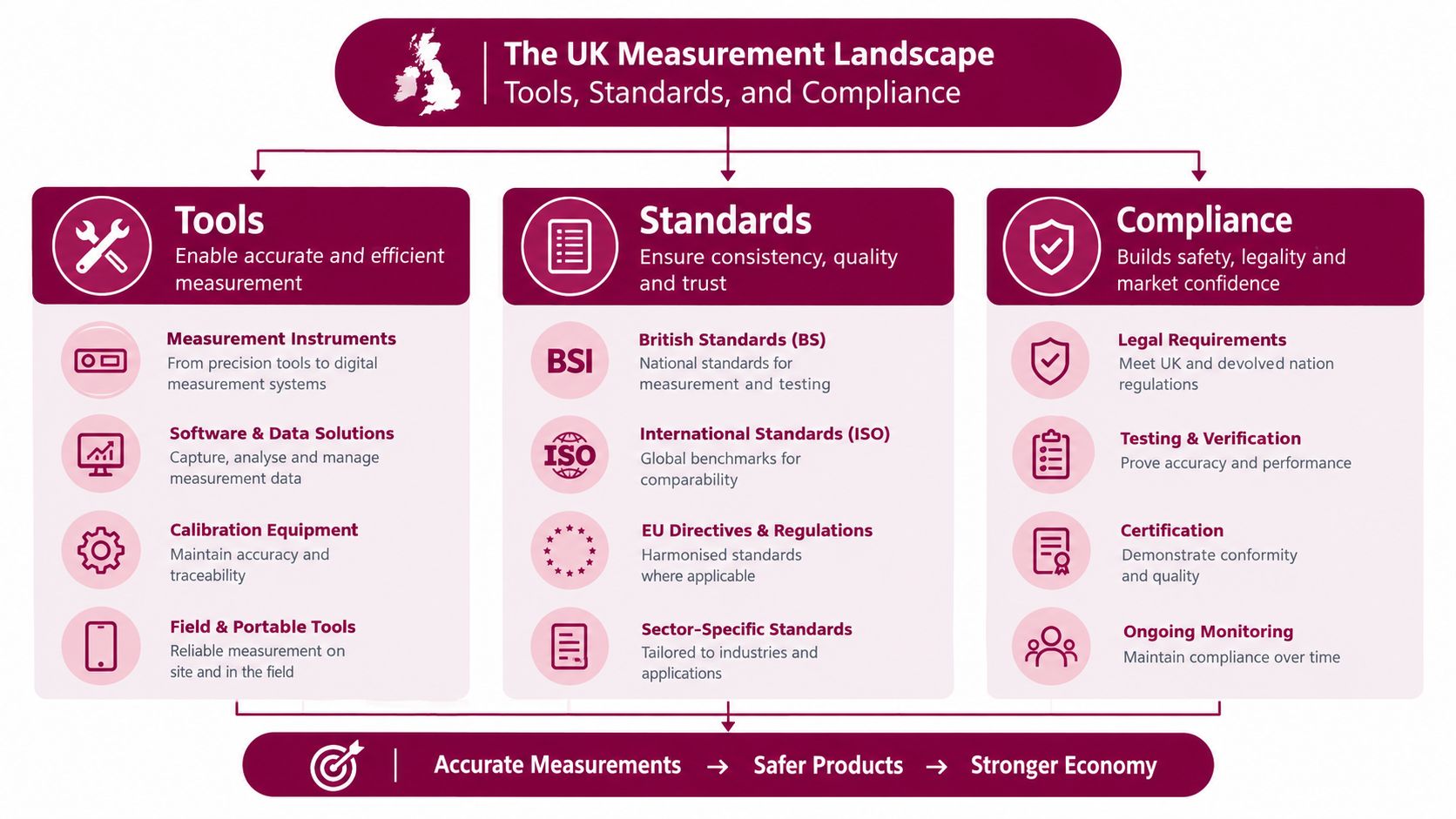
The UK measurement environment combines technical tools, shared standards, and legal boundaries. Together, these determine what marketing teams can measure, how confidently they can interpret results, and which uses of data are responsible. Web analytics is now a mainstream part of UK marketing practice rather than a specialist activity (source). For leaders, the issue is not just selecting a reporting platform. It is establishing evidence that can support decisions.
Tools are only the first layer
A useful measurement setup connects search visibility with onsite behaviour. Search data indicates whether prospective customers can find an organisation. Onsite analytics shows what happens after they arrive. Reading these sources together helps analysts locate the problem: weak discovery, poor landing-page relevance, or an ineffective conversion process.
The distinction resembles an inspection of both the road to a shop and the experience inside it. A business may attract visitors successfully while offering a confusing journey once they arrive. Reporting one stage without the other can lead managers to improve the wrong activity.
Standards provide a common basis for comparison. Governed audience measurement standards should anchor assessments of cross-device reach and frequency, rather than whatever one platform reports about its own activity. This gives leaders a more consistent basis for allocating attention and evaluating performance.
Compliance shapes what can be measured
UK marketing analytics operates within privacy and electronic communications requirements. Organisations generally need to tell users that cookies are present, explain their purpose, and obtain consent before storing a cookie on a device (ICO guidance). The tracking layer often begins the measurement process, so data collection and governance need to be designed together. The related ethical considerations and data privacy in analytics provide a useful framework for that judgement.
A narrow exemption may apply to cookies used solely for statistical analysis. It covers aggregate information, such as user journeys and page engagement, but not individual tracking or advertising use (legal overview). Measurement is therefore a leadership decision as well as a technical one.
If the data collection method would be uncomfortable to explain plainly to a customer, it probably needs review.
Real-World Applications and Decision Scenarios
A mid-size retailer and a B2B service business can both use analytics well, but they tend to solve different problems. The retailer is usually trying to reduce waste across channels. The B2B team is often trying to improve relevance so fewer leads are ignored and more prospects respond.
Comparing two common decision patterns
In a retail setting, attribution modelling helps leaders compare channels that look similar on the surface but play different roles in the journey. One channel may generate awareness, another may close the sale, and a third may assist both. Once the team understands that pattern, it can shift budget away from activity that looks busy but contributes little.
In a B2B setting, segmentation is often the sharper lever. A campaign aimed at everyone tends to speak to no one clearly. Once the team divides the audience by behaviour or lifecycle stage, the message becomes more specific and the email sequence becomes easier to match to intent.
The contrast is useful because it shows a broader principle. Attribution helps answer, “What happened across the journey?” Segmentation helps answer, “Who should receive what next?” Those are different decisions, and good teams do not confuse them.
Leaders often fail when they use one method to answer the other method's question.
Both examples point to the same managerial habit, using measurement to reduce ambiguity. That is where analytics stops being a reporting discipline and starts becoming a decision discipline.
Building Analytics Capability in Your Organisation
The UK skills picture shows that demand for analytics is rising faster than many organisations are building capability. A UK survey found that 36% of businesses wanted more training in data analytics for marketing purposes, which suggests there is still a gap between tool adoption and confident use of the data (source). That gap is important, because software alone does not create evidence-led management.
Capability is a culture issue as much as a skills issue
If the leadership team rewards speed over accuracy, analytics gets treated as decoration. If the leadership team asks for evidence before approving budget shifts, analytics becomes part of governance. The difference is cultural, not technical.
Building capability therefore requires three things. First, people need a shared language for metrics and methods. Second, they need time to practise judgement, not just memorise definitions. Third, they need leaders who model the habit of asking for evidence before deciding.
Learning pathways should match the role
For early-career professionals, the starting point is understanding how metrics connect to goals. For managers, the priority is learning how to interpret reports and challenge weak assumptions. For entrepreneurs, the challenge is choosing a few measures that reflect whether the business is moving in the right direction.
That is why structured, self-paced learning can be useful. A provider such as the London School of Business Administration offers business and data-focused programmes, including routes in marketing, web analytics, and broader decision-making, which makes it easier to build capability without relying on ad hoc learning alone. Used well, that kind of study supports a more disciplined organisational habit, where evidence is expected rather than improvised.
Practical Steps to Develop Your Analytics Skills
Start with the question, not the spreadsheet. If you know whether you are trying to improve awareness, conversion, retention, or efficiency, you can choose the right metrics and avoid drowning in data. That discipline saves time and makes reports easier to act on.
A workable progression for busy professionals
- Learn the metric hierarchy. Understand the difference between engagement, efficiency, and outcome measures. That helps you stop treating every number as equally important.
- Review your own campaigns. Pick one recent campaign and trace how the audience moved from exposure to action. You will quickly see where the data is strong and where the gaps are.
- Practise segmentation. Group audiences by behaviour or value and compare how they respond. Even simple segment analysis can expose where one message is carrying too much work.
- Test attribution carefully. Compare how a first-touch view and a last-touch view change the story. The point is not to find a perfect model, but to notice how the model shapes the conclusion.
- Use analytics in decisions, not just reports. Bring the data into budget reviews, campaign planning, and performance discussions. That is where the learning becomes strategic.
A strong next step for many professionals is a structured course in Web Analytics, because it helps connect site behaviour, measurement logic, and performance interpretation in one place.
The deeper lesson is simple. Analytics is not a technical burden to be delegated and forgotten. It is a leadership capability that improves judgement, sharpens allocation decisions, and makes growth more sustainable when the market is under pressure.
If you want to turn measurement into better leadership, explore the practical business programmes at London School of Business Administration. The school's self-paced, CPD-accredited learning can help you build the analytical judgement needed for marketing, management, and data-led decision-making.