
44% of working-age adults in Britain experienced conflict at work in the previous 12 months, so conflict management skills are not optional, they are a core leadership capability. In practical terms, that means managers need to spot friction early, respond proportionately, and prevent disagreement from becoming a drain on time, money, and trust.
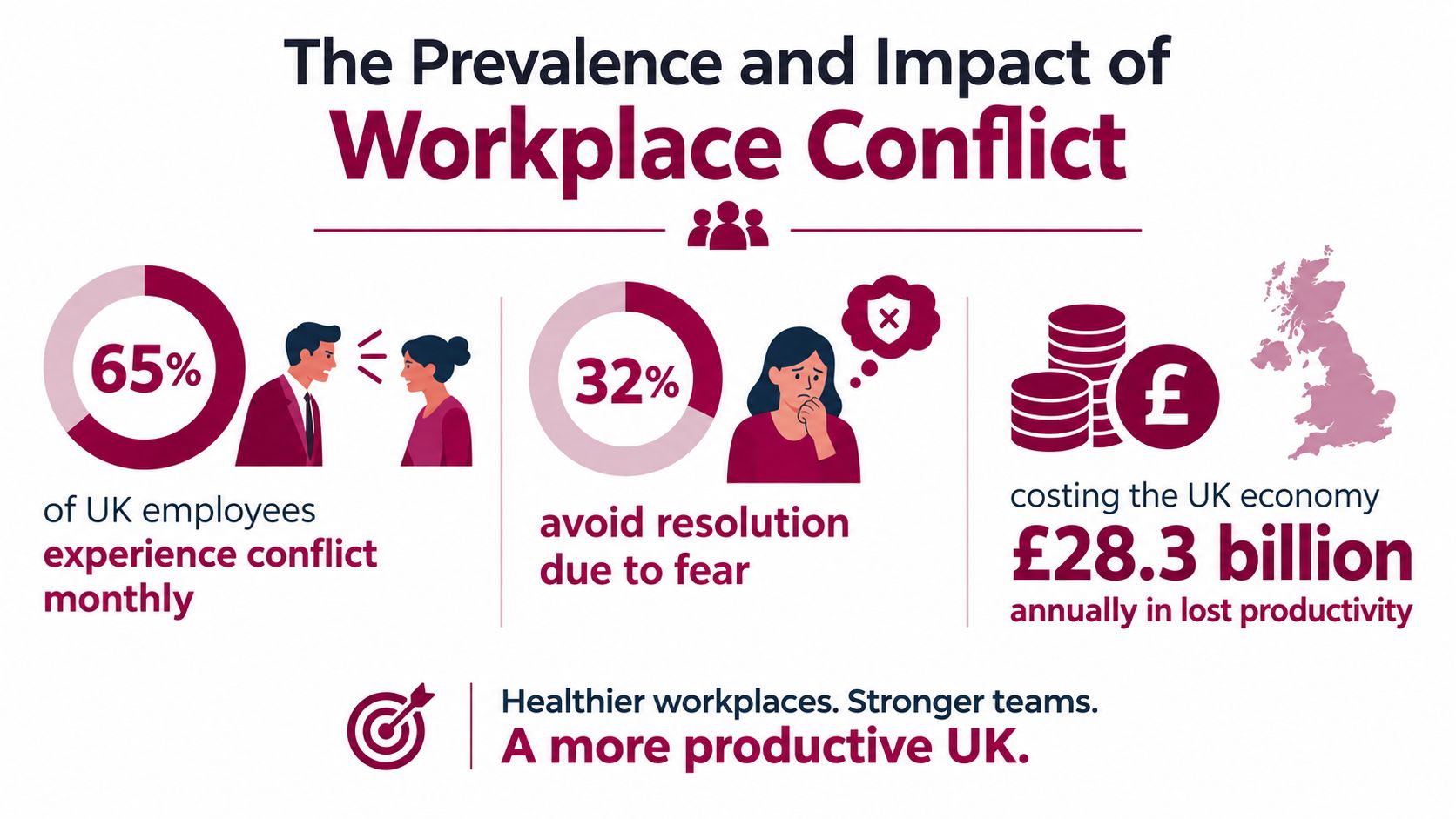
Workplace conflict is often treated as a personality problem. That view is too narrow. In UK organisations, conflict management skills sit at the intersection of communication, judgement, and operational control, because unresolved tension can affect absence, turnover, productivity, and the quality of working relationships. Acas estimates the annual cost of workplace conflict to the British economy at almost £30 billion, which is a strong signal that this is not a minor interpersonal issue but a material business concern. Acas's anniversary report on workplace conflict places that scale in context, and it helps explain why leaders who can handle disagreement well tend to build healthier teams.
Table of Contents
- The Prevalence and Impact of Workplace Conflict
- Understanding Conflict Types and Behavioural Models
- Implementing Interest-Based Relational Approaches
- Case Studies in Conflict Resolution Outcomes
- Practical Techniques and Communication Scripts
- Assessment and Development Roadmap
The Prevalence and Impact of Workplace Conflict
Workplace conflict is common enough that managers should expect it, not treat it as an exception. Acas's workplace conflict report shows that conflict at work reaches far beyond a few difficult personalities. It affects team leaders, line managers, human resources professionals, and anyone responsible for keeping work moving when relationships become strained.
Conflict management as a trainable discipline
Conflict management skills are best understood as learnable behaviours, not as a fixed personality type. They include active listening, constructive communication, negotiation, impartial fact-finding, and the discipline to intervene before a disagreement hardens into a formal dispute. Managers do not need to be naturally diplomatic to be effective. They need a repeatable method that helps them choose the right response for the situation.
Practical rule: if a disagreement is affecting work, waiting for people to “sort it out themselves” usually shifts the cost onto the team.
The financial impact is serious. Acas's cost analysis estimates workplace conflict costs UK employers approximately £28.5 billion annually, or around £1,028 per employee and £2,939 for each employee directly involved. Its cost analysis also links conflict to reduced productivity, sickness absence, resignations, and dismissals. In other words, a manager's response is never only interpersonal, it is operational.
A useful way to separate the problem is to distinguish interpersonal tension from structural conflict. Interpersonal tension may involve misunderstandings, frustration, or personality mismatch. Structural conflict usually comes from unclear roles, competing priorities, or limited resources. Both can look messy on the surface, but the underlying cause determines the right intervention. A leader who treats every disagreement as a personality clash will miss the organisational problem underneath it.
Managers therefore need to diagnose early, not merely react quickly. They should ask who is affected, what behaviour is observable, whether the issue is conduct or fairness, and what level of intervention is proportionate. That is the basis of effective leadership, and it is why conflict management belongs alongside communication and decision-making in foundational management development.
Understanding Conflict Types and Behavioural Models
Not all conflict behaves in the same way. Some disputes are about work output, deadlines, or priorities. Others are about status, trust, tone, or perceived disrespect. A manager who can distinguish these patterns is better placed to respond with the right level of firmness and care.
Interpersonal tension and structural conflict
Interpersonal tension usually shows up in language, body language, or repeated friction between two people. Structural conflict is different, because the disagreement is often produced by the system around them, such as overlapping responsibilities, scarce time, or inconsistent expectations. In practice, the same argument can contain both elements, which is why careful diagnosis matters.
That distinction is especially useful in team settings. If two colleagues disagree about who should do what, the problem may not be their personalities at all. It may be that the work was never defined clearly enough. If a manager only mediates the emotions and ignores the structure, the same conflict will return in a new form.
The Thomas-Kilmann model in plain language
The Thomas-Kilmann Conflict Mode Instrument helps managers see that people tend to handle conflict along two dimensions, assertiveness and cooperativeness. That creates five modes, competing, collaborating, compromising, avoiding, and accommodating. Each mode can be useful in the right context, but none is automatically correct in every situation.
| Mode | What it tends to prioritise | Typical use |
|---|---|---|
| Competing | Own outcome | Urgent decisions, safety, clear boundaries |
| Collaborating | Joint outcome and relationship | Complex issues where both sides matter |
| Compromising | Shared settlement | Moderate importance on both sides |
| Avoiding | Neither outcome nor relationship strongly | Low-stakes issues or cooling-off periods |
| Accommodating | Relationship over own outcome | Preserving goodwill when the issue is minor |
The value of this model is that it turns vague behaviour into something you can assess. A manager who always avoids may be protecting short-term harmony but creating long-term resentment. A manager who always competes may solve the immediate issue but damage trust. The strongest leaders move between modes deliberately, rather than defaulting to one style in every dispute.
A relevant management lesson also appears in Conflict Resolution, which is best treated as a structured capability rather than a one-off tactic. The point is not to memorise labels, but to match behaviour to context.
You can also deepen this judgement by reflecting on emotional intelligence, because conflict style is rarely separate from how well someone reads the room. The relationship between self-awareness and leadership behaviour is discussed clearly in this emotional intelligence in leadership guide. Once managers understand both the type of conflict and their own default response, they can choose interventions with far more precision.
Implementing Interest-Based Relational Approaches
A practical conflict conversation works better when the manager stops treating it as a contest over who is right. Interest-based relational approaches do exactly that. They separate the people from the problem, protect the working relationship, and move attention towards needs, concerns, and workable options.
Start with the underlying interests
A position is what someone says they want. An interest is why they want it. That distinction matters because two people can defend opposite positions while sharing a similar underlying need, such as fairness, workload balance, recognition, or clarity. If the manager only hears the demand, they miss the reason the demand matters.
For example, one employee may insist on leading a project, while another resists that idea. The visible positions conflict, but the underlying interests may be about visibility, confidence, or accountability. Once those interests are named, the conversation becomes less adversarial and more practical.
Use a structured sequence
A disciplined manager can follow this sequence in most routine disputes.
- Separate people from the issue. State the behavioural concern without assigning character judgement.
- Explore each person's interests. Ask what outcome they need and what they are worried about.
- Test shared ground. Identify any goals both sides already agree on.
- Shape joint options. Build solutions that address the work, not just the emotion.
That sequence works because it reduces defensiveness. People are more likely to speak openly when they do not feel they are being blamed. It also gives the manager a way to keep the conversation anchored to behaviour and outcomes rather than personalities.
The best conflict conversations are calm, specific, and procedural. They are not improv performances.
A strong communication habit can make this easier, which is why Communication Skills for Leaders is relevant to conflict work as well. Leaders who ask precise questions, listen without interruption, and summarise fairly are usually better at keeping difficult discussions productive.
The aim is not to make everyone agree. The aim is to produce a result that people can live with and follow. That is why interest-based methods are so useful in teams, because they preserve dignity while still dealing directly with the work problem.
Case Studies in Conflict Resolution Outcomes
A project team misses deadlines for three weeks in a row. At first, the manager assumes workload pressure is the cause. A short fact-finding conversation shows something else. Two colleagues have been working from different priorities and have been escalating frustration through side comments rather than direct discussion. Once the manager brings them into a structured conversation, each person can name what they need, and the work plan becomes visible again. The lesson is practical. Early intervention stopped a problem from spreading through the rest of the team.
That kind of pattern is common in workplaces where disagreement is left to harden. Acas estimates that workplace conflict can cost employers about £2,000 for a complex dispute resolved early through informal means, compared with about £45,000 if the same dispute goes through the full employment tribunal process. Its economic impact report shows why delay is so expensive. Once a disagreement becomes formal, managers spend more time on process, the relationship becomes more brittle, and the practical options narrow. For a wider example of how a manager can intervene before tensions harden, see our guide on handling conflict at work.
What effective intervention changes
The difference between those outcomes is structure. Managers who act early can separate facts from assumptions, ask each person to describe the problem, and decide whether the issue belongs in an informal conversation, a formal grievance route, or specialist conciliation.
A second example comes from structured dispute resolution at organisational level. In 2023 to 2024, Acas received 104,884 early-conciliation notifications for individual employment disputes, and 20,067 reached a formal conciliation agreement through a COT3 settlement. The same annual report also shows that 56,827 did not progress to tribunal for other reasons. The point is straightforward. Structured handling can contain disputes before they become prolonged legal problems.
Conflict becomes expensive when managers confuse silence with resolution.
These cases show why conflict management matters to both productivity and relationships. Poor handling leaves work unfinished, increases frustration, and pulls senior time into problems that should have been contained earlier.
Practical Techniques and Communication Scripts
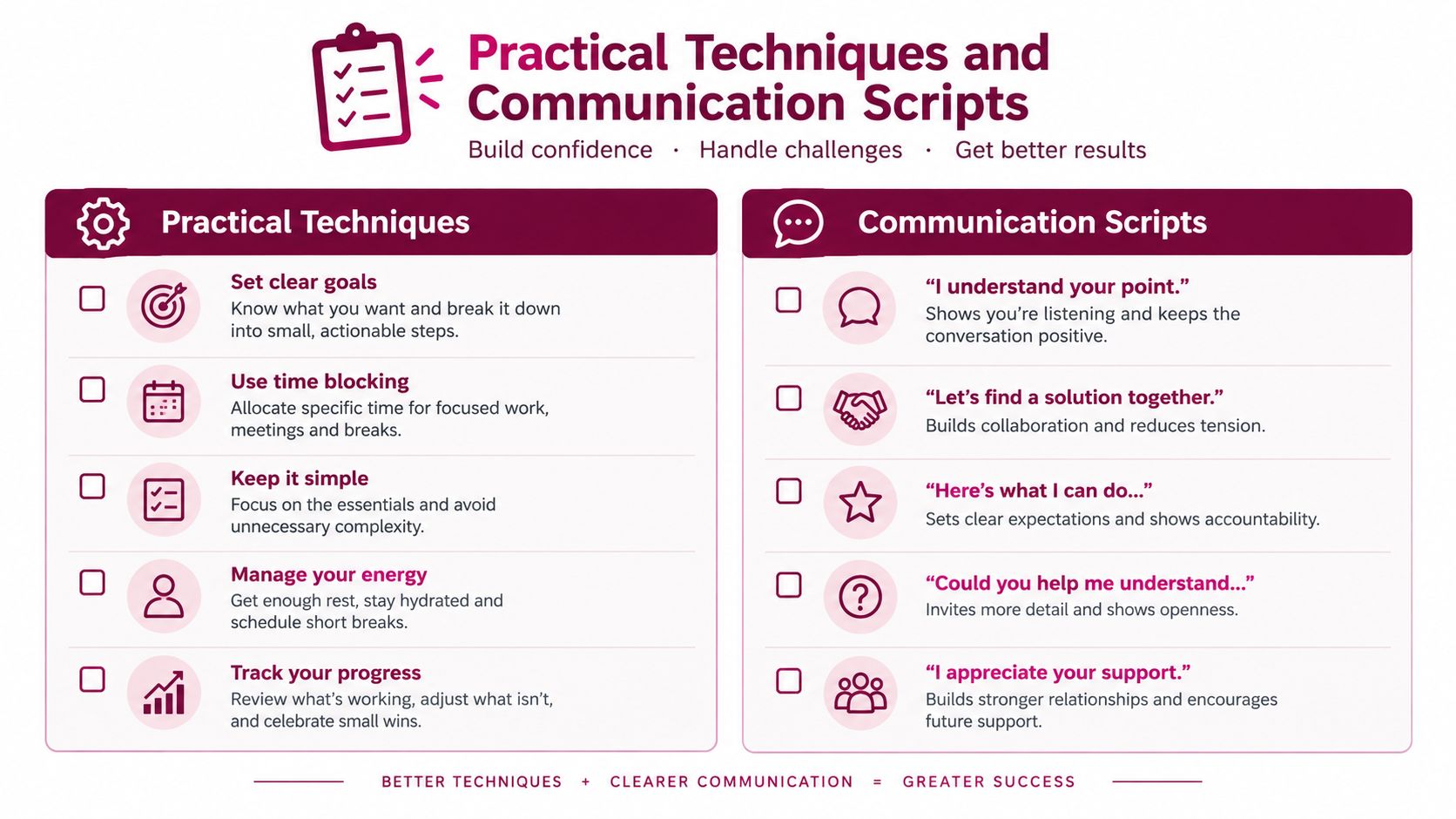
Managers often know a difficult conversation is necessary, but they hesitate because they do not know how to begin. The answer is to use simple, procedural language that lowers tension and keeps the discussion focused. Scripted phrases help because they reduce improvisation, and improvisation is where many conversations go wrong.
Phrases that help de-escalate
A calm opening often changes the tone of the whole exchange. A manager might say, “I want to understand what's happening before we decide what to do,” or “Let's focus on the specific behaviour and the impact it's having.” These sentences work because they show control without aggression.
During fact-finding, it helps to ask one person at a time, “What happened from your point of view?” and then, “What would a workable outcome look like for you?” Those questions separate narrative from demand. They also give people a route from complaint to solution.
Ground rules for joint meetings
Joint meetings should not be casual chats. They need clear rules, such as speaking one at a time, avoiding interruptions, and agreeing on the issue to be addressed before the discussion begins. The manager should summarise points neutrally, check for accuracy, and record any commitments, owners, and review dates.
A short checklist can make this easier.
- State the issue clearly: Name the work problem without adding personal judgement.
- Confirm the facts: Establish what each person saw, heard, or did.
- Define next steps: Agree what will change, who will do it, and when it will be reviewed.
- Close with clarity: Restate the agreement so nobody leaves with a different interpretation.
The language should stay concrete. “I need clearer handover notes by Friday” is stronger than “Please communicate better”. The first sentence can be checked. The second can be argued over.
Communication also includes body language, tone, and pace. A manager who rushes, sighs, or interrupts will make the conversation harder. A manager who pauses, listens, and reflects back what they heard creates the conditions for a more honest exchange. That discipline is not soft, it is operationally useful.
Assessment and Development Roadmap
Unmanaged conflict is not just a people problem. It absorbs management time, disrupts delivery, and can spread into wider operational costs. Leaders therefore need a simple way to assess whether their habits reduce friction or add to it.
A practical self-assessment
A useful self-check starts with five questions.
- Do I spot conflict early, or only after frustration is visible?
- Can I tell the difference between a personality clash and a structural issue?
- Do I listen long enough to understand the underlying interests?
- Can I hold a difficult conversation without raising the temperature?
- Do I record commitments and review them later?
If an answer is uncertain, the gap is usually not theory alone, it is practice. Conflict management improves when leaders rehearse the sequence, reflect on what happened, and treat each difficult conversation as a chance to improve the next one.
A development plan that works
A solid roadmap has three parts. First, learn the framework so you know what good practice looks like. Second, use it in low-risk conversations before applying it to higher-stakes disputes. Third, review the outcome against concrete indicators, such as time to intervention, repeat conflict, absence, informal resolution, and employee perceptions of fairness.
Formal study can support that process. The Conflict Resolution module within The Credential of Leadership and Management gives managers a structured route rather than an improvised one. It connects communication, judgement, and team leadership in a way that supports day-to-day decision-making.
Acas also shows why this matters economically. It estimates that collective conciliation alone generated £117 million in economic benefit in 2023 to 2024, up from £93 million in 2018 to 2019. Its annual report indicates that structured conflict handling has measurable value, not just abstract appeal.
A manager does not need to eliminate conflict. That would be unrealistic. The task is to handle it early, fairly, and with enough structure to protect both performance and relationships.